
Quick answer
The smell comes back because urine soaks through the carpet into the pad and subfloor underneath. Surface cleaners and vinegar only mask the top layer. To fully remove it, the urine crystals deep in the pad must be broken down with an enzyme treatment and extracted with hot water — that's what professional steam cleaning does.
The science bit
Why the Smell Keeps Coming Back
- Urine doesn't stay on the surface. It soaks down through the carpet fibers, into the padding, and sometimes into the subfloor.
- When it dries, it forms urine salt crystals. Every time humidity rises or the spot gets damp, the crystals reactivate and release odor again.
- That's why the smell gets worse on rainy days — and why a spot that "seemed clean" smells again weeks later.
DIY
What You Can Try at Home
- 1
Blot fresh urine immediately with paper towels — press, don't rub.
- 2
Apply an enzyme cleaner (not vinegar, not baking soda alone). Enzymes break down the uric acid crystals. Follow the label — most need to stay wet on the spot for 10-15 minutes.
- 3
Blot again and let it air dry fully.
- 4
Repeat 2-3 times for older spots.
Save your money
What Doesn't Work
- Vinegar: masks odor for a few days, doesn't break down urine crystals.
- Baking soda: absorbs surface odor only.
- Rental machines: not enough heat or suction to reach the pad, and often push urine deeper.
- Scented sprays and powders: your nose adapts, your dog's doesn't — pets re-mark the same spot.
A Warning About Wool Rugs
Wool is a different story. Vinegar, ammonia, and most store-bought cleaners can permanently damage wool fibers or cause the dyes to bleed. Urine itself can also yellow wool if it sits. If it's a wool or oriental rug, don't experiment — the rug usually costs far more than professional cleaning. We see this constantly — see the real case study below.
Real case
Real Case: What DIY Attempts Did to a Wool Rug
A recent client in North Jersey called us about a pet urine stain on a gray wool rug. Before calling, they had tried vinegar, baking soda, and a store-bought carpet shampoo with high pH — the exact products most guides recommend. By the time we arrived, the stain was about a week and a half old.
We removed the urine and the odor completely with enzyme treatment and hot-water extraction. But here's the important part: the high-pH shampoo and vinegar had already chemically damaged the wool fibers in that spot. Wool is protein — harsh chemicals essentially burn it, the same way they'd damage hair. That kind of fiber damage is permanent. The cleaning was done properly and the rug looks dramatically better, but a faint shadow remains where the fibers were damaged — not by the urine, but by the products used on it.
The takeaway: on wool, the DIY attempt often does more permanent damage than the accident itself. If we'd been called first, this rug would look brand new.
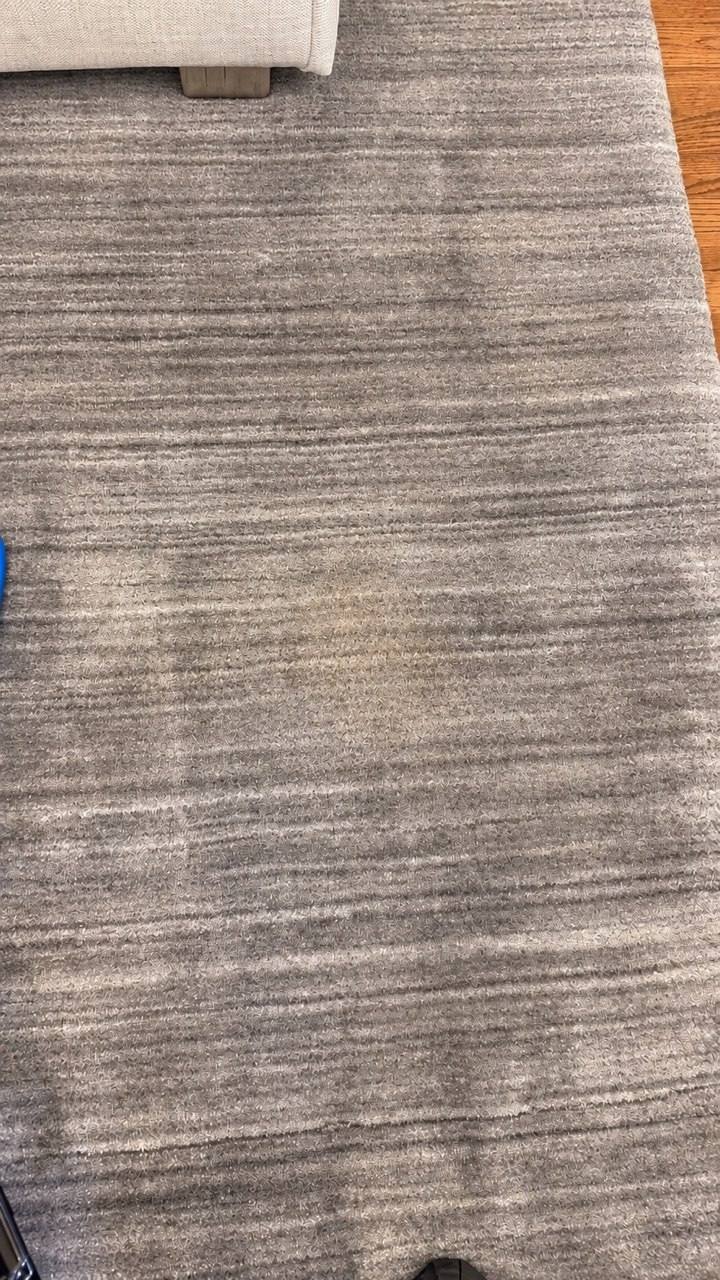
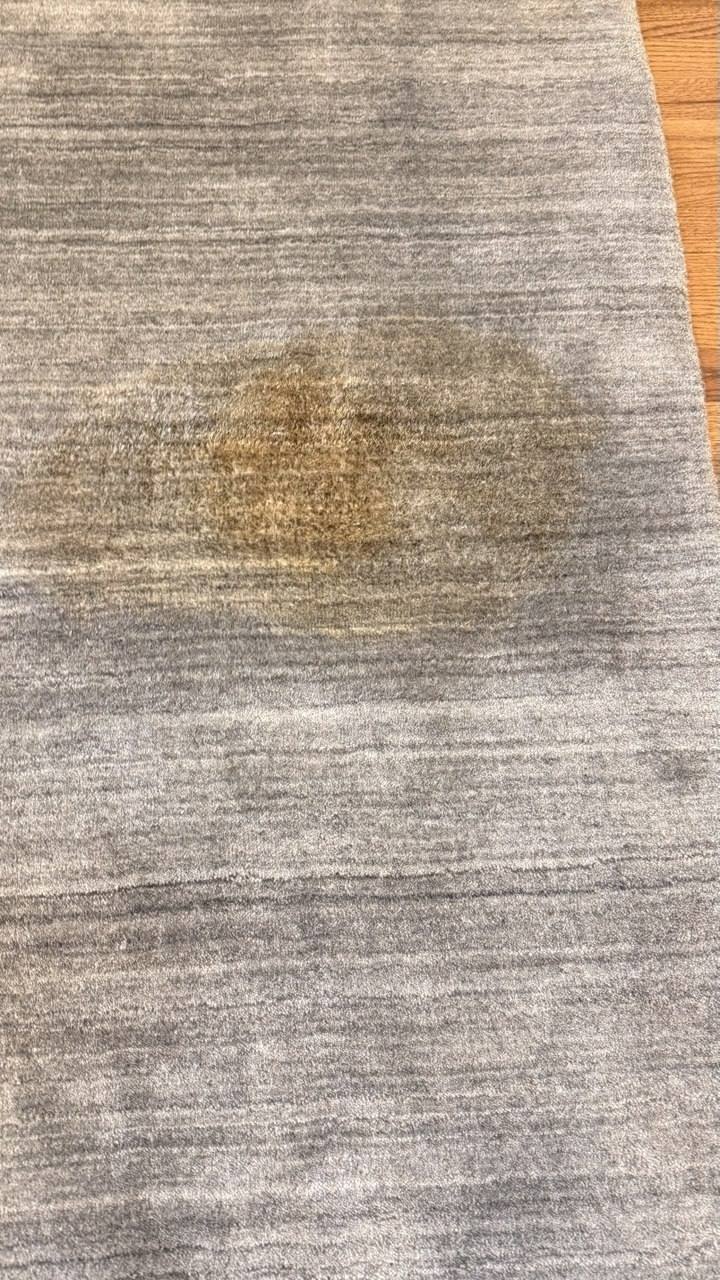 Swipe to compareBeforeAfter
Know when to call
When to Call a Professional
Call a pro if any of these are true:
- The smell returns after you've cleaned the spot 2-3 times
- The spot is larger than a dinner plate (it's likely reached the pad)
- It's a wool, silk, or oriental rug
- Multiple accidents in the same area
- You're smelling urine but can't find the spot
Our process
How We Remove Pet Urine
- 1
UV inspection to find every affected spot — including ones you can't see
- 2
Enzyme pre-treatment that breaks down urine crystals in the fibers and pad
- 3
Hot-water extraction (steam cleaning) that flushes and removes the residue
- 4
Odor treatment so the smell doesn't come back
Ready to Actually Get Rid of the Smell?
Carpet steam cleaning starts at $168 per room, and we treat pet urine spots as part of the job. We're insured, background-checked, and have 750+ five-star reviews across North Jersey.