
By Stain Steamer · October 6, 2026 · 4 min read
The real job: a small-machine attempt, then our clean
This client tried cleaning the couch with a small machine and made a bigger mess. We then cleaned the rest. In the first photo, the seat cushions have uneven marks; in the second, the upholstery looks cleaner and more even.
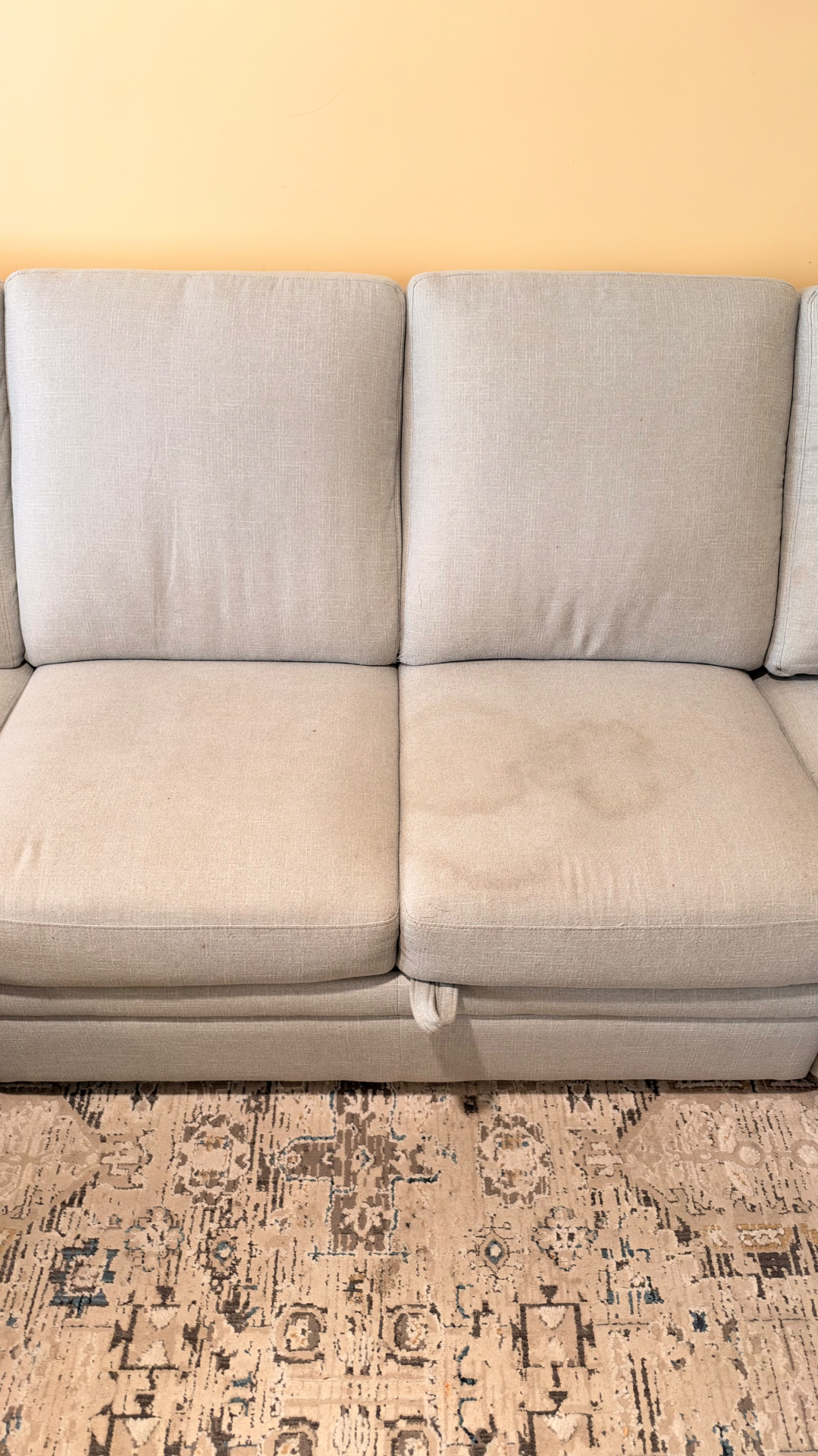
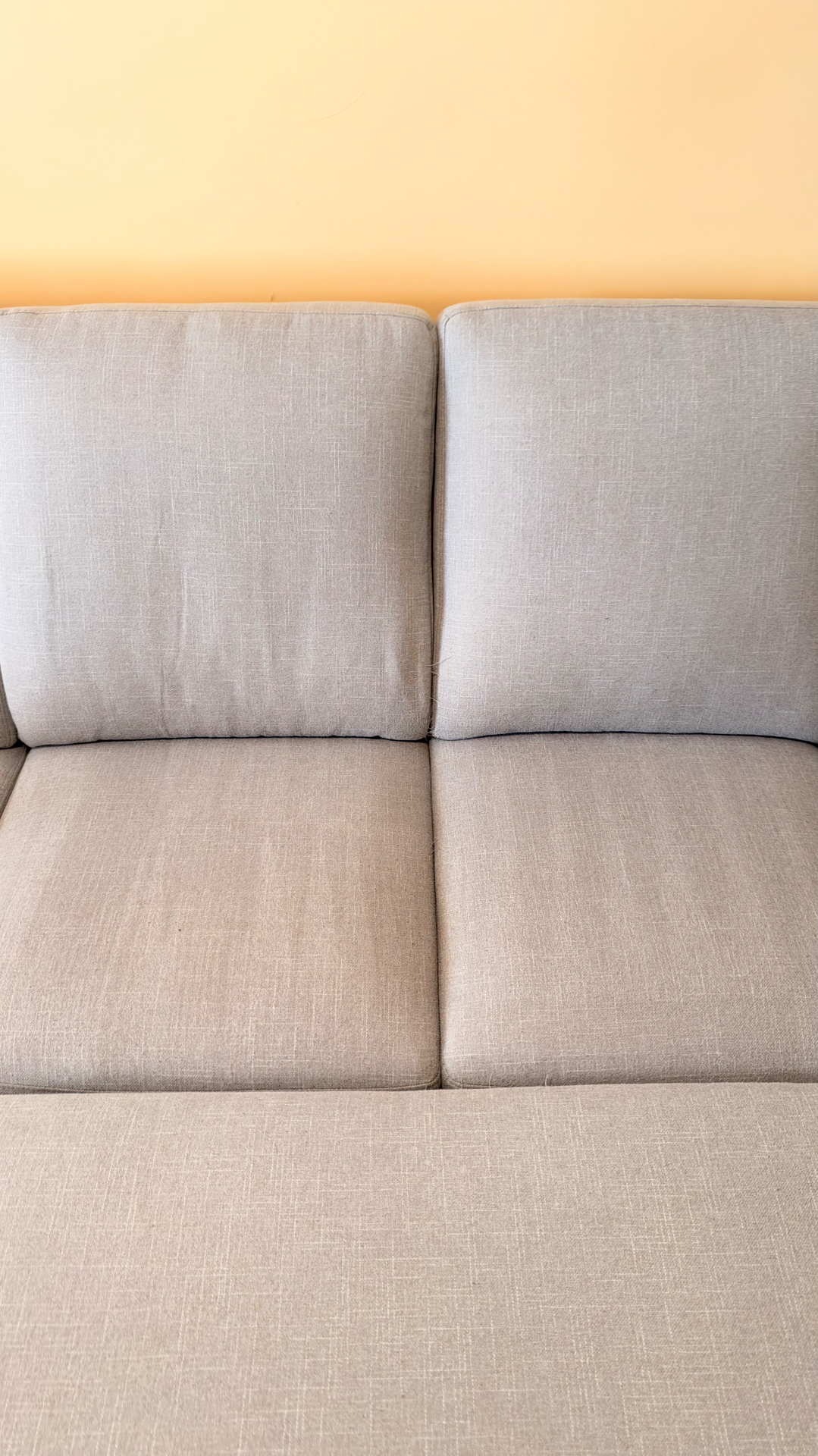
These are the original client-job photos. They show the result, but do not establish the machine brand, detergent used, or exact cause of the marks. One job’s outcome is not a guarantee for every fabric or stain.
Why marks can appear after cleaning
A couch looking worse does not automatically mean the machine damaged it. Several different issues can produce a similar appearance, and the right next step depends on the fabric and what was applied.
- Uneven wetting and drying
- Cleaning just part of a cushion can leave a visible boundary. Too much moisture may carry soil toward the edge of a damp area as it dries.
- Cleaning-product residue
- Excess product or incomplete removal can leave residue. Adding more detergent is not necessarily the answer.
- Soil returning to the surface
- Moisture can bring deeper soil back toward the surface during drying. A mark that returns needs assessment rather than repeated soaking.
- Fabric sensitivity or pile direction
- Some fabrics react poorly to water or cleaning products. Others look lighter or darker when the fibers lie in different directions. Photos alone cannot tell these apart reliably.
What to do before trying again
- Stop adding water and products. Avoid repeated wet passes, vigorous scrubbing, and mixing household cleaners.
- Check the care label. W generally indicates water-based cleaning; S indicates solvent-based care; W/S allows either approved method; X means vacuuming or brushing only. Follow the manufacturer’s instructions—the code is not permission to saturate the fabric.
- Allow airflow. Keep the couch unused while damp and ventilate the room. Avoid direct high heat. Persistent dampness or a musty smell warrants professional assessment.
- Save the details. Photograph the marks and care tag. Tell the cleaner what product you used, how much water you applied, and whether the marks appeared immediately or after drying.
- Ask for an assessment. A cleaner can inspect the fabric and test a suitable method before treating the affected upholstery. Permanent discoloration or damage may not be removable.
Is a small upholstery machine always a bad idea?
No. A portable machine may be appropriate for a limited fresh spill on compatible upholstery when both the furniture and machine instructions allow it. Use only an approved product and test an inconspicuous area first. Delicate fabrics, unknown care instructions, large affected areas, or marks that worsen are reasons to stop and seek advice.
Need help with a couch in North Jersey or NYC?
Stain Steamer is based in Hackensack, NJ and serves Bergen County, North Jersey and NYC. A standard three-seat couch is $158; fabric condition and stain-removal expectations should be discussed before cleaning.